Context
In 2022, Uber staked its future on customer loyalty with the global launch of Uber One, a unified membership for its Rides and Delivery services. The strategy worked, and during my time at the company I witnessed explosive growth in the subscriber base, which nearly doubled in 2022, reaching 12 million members.
This growth was a golden opportunity, but also a massive operational challenge, since Uber One members proved to be the company’s most valuable customers, spending almost 4 times more than non-members. To keep them engaged and attract new subscribers, global operations teams needed to launch, manage, and personalize thousands of offers and benefits on an ongoing basis.
The challenge
When I joined the project, EEM was in a test-environment prototype stage but lacked an intuitive user experience. The platform was complex, prone to unintentional user errors, and offered no clear visibility into which campaigns were active, which were about to launch, and other issues I’ll cover in this case study.
This platform was originally built by engineers, for engineers, and as a result only the development team could configure and launch Uber One membership campaigns on Uber Eats and Uber Rides — creating a huge dependency and a bottleneck that delayed new offer launches by weeks. That was because the people managing memberships had to file change requests, wait for them to be implemented, review them in test environments, and finally request the actual launch of these campaigns all over again.
If you factored in Uber One’s expansion into future new countries, the platform and its management were going to become unsustainable. It couldn’t support operations teams in the 34 countries it covered at the time, let alone its future growth.
The challenge was clear: I needed to transform EEM from a technical, cumbersome tool into a self-service platform built for global use — intuitive and powerful for operations teams, not just the development team. I had to eliminate the engineering bottleneck and hand full campaign control over to operations teams, letting Uber scale its membership strategy at the pace the business demanded.
Role and responsibilities
As a Product Designer on Uber’s membership team, I joined the EEM project right before its launch, with an urgent need for design intervention. My key responsibilities were:
- Leading the UX Strategy: I was responsible for auditing the platform, identifying critical friction points, and defining a new vision for the user experience.
- User Research and Analysis: I conducted a full analysis of the existing workflows and worked to gather feedback from end users (operations agents) to make sure the new solution met their real needs.
- Solution Design: I designed and defined the new interaction flows, wireframes, and information architecture for creating, managing, and tracking campaigns.
- Cross-functional Collaboration: I worked closely with Product Managers to align the product vision with business goals, and with the Engineering team to ensure a feasible, high-quality implementation, negotiating priorities against a tight deadline.
The design process
My approach centered on untangling the complexity and delivering a tool that inspired confidence and efficiency.
- Audit and Flow Mapping: I started with a deep dive into the existing platform, intending to map every step of the campaign-creation process, from the initial request to validation, identifying redundancies, unnecessary steps, and the root cause of the most common errors.
- Understanding the User: Even with limited time, I made sure to understand the users involved and stakeholder expectations. My product manager helped me channel feedback from operations agents across different countries to understand what they actually needed — in short: visibility, control, traceability, and confidence in their actions.
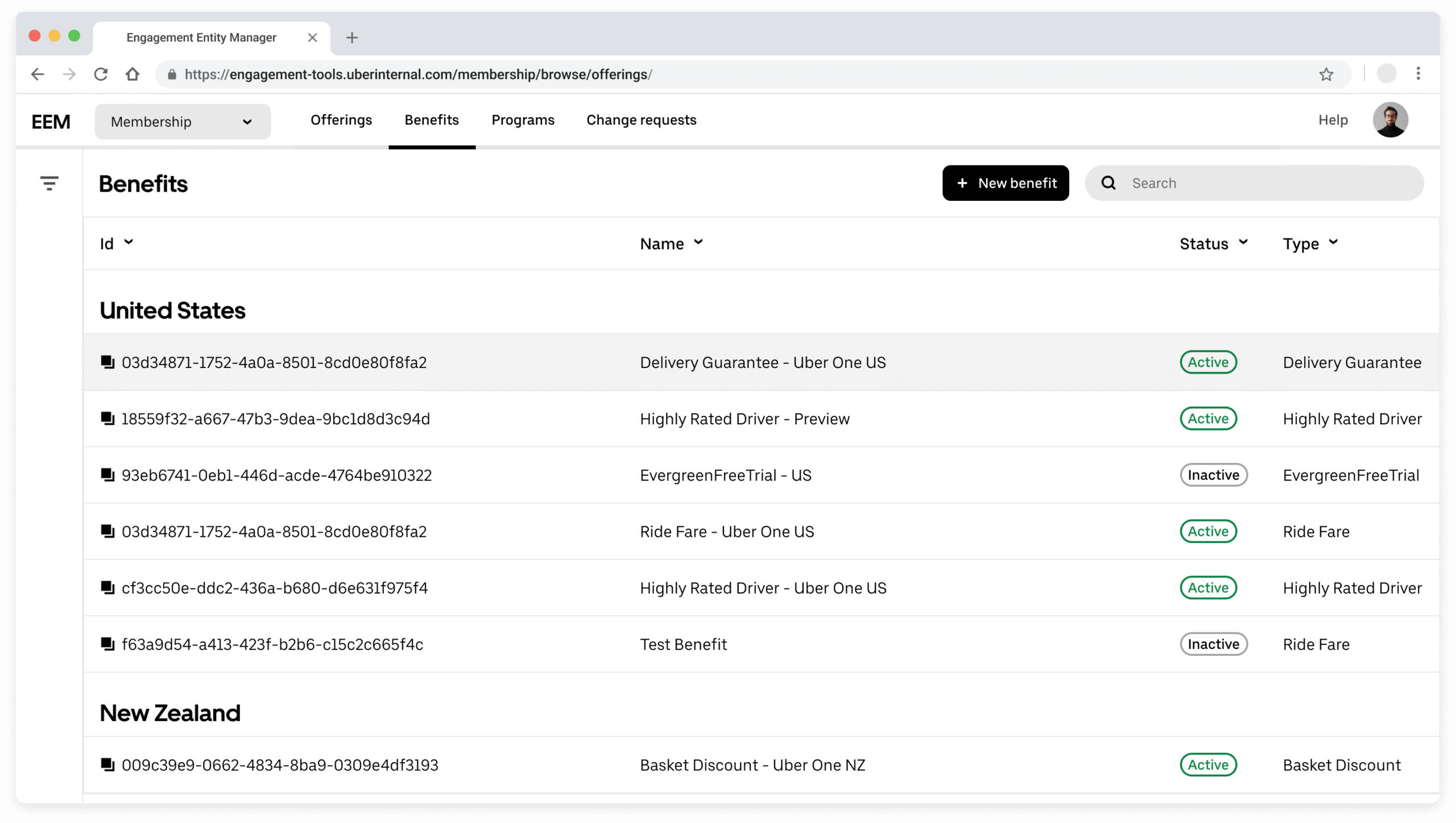
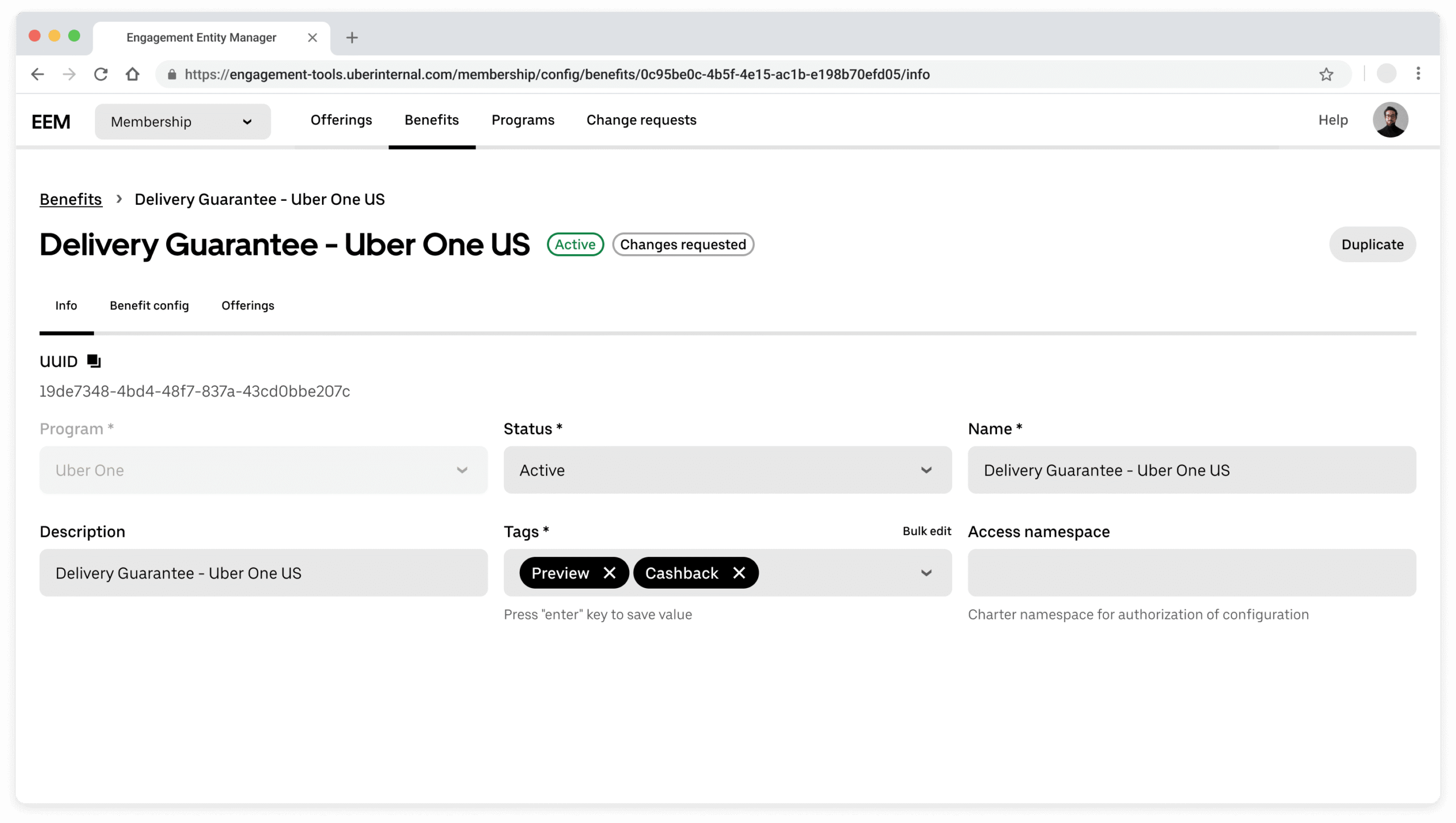
- Task-centered Redesign: The solution focused on optimizing the core flow of creating, editing, testing, and launching campaigns. I simplified forms with dozens of fields, grouping information and presenting it logically, using smart defaults to reduce cognitive load, or even letting a campaign start from another one. I created a centralized dashboard that let agents see the status of all their campaigns at a glance (active, scheduled, in review, and more).
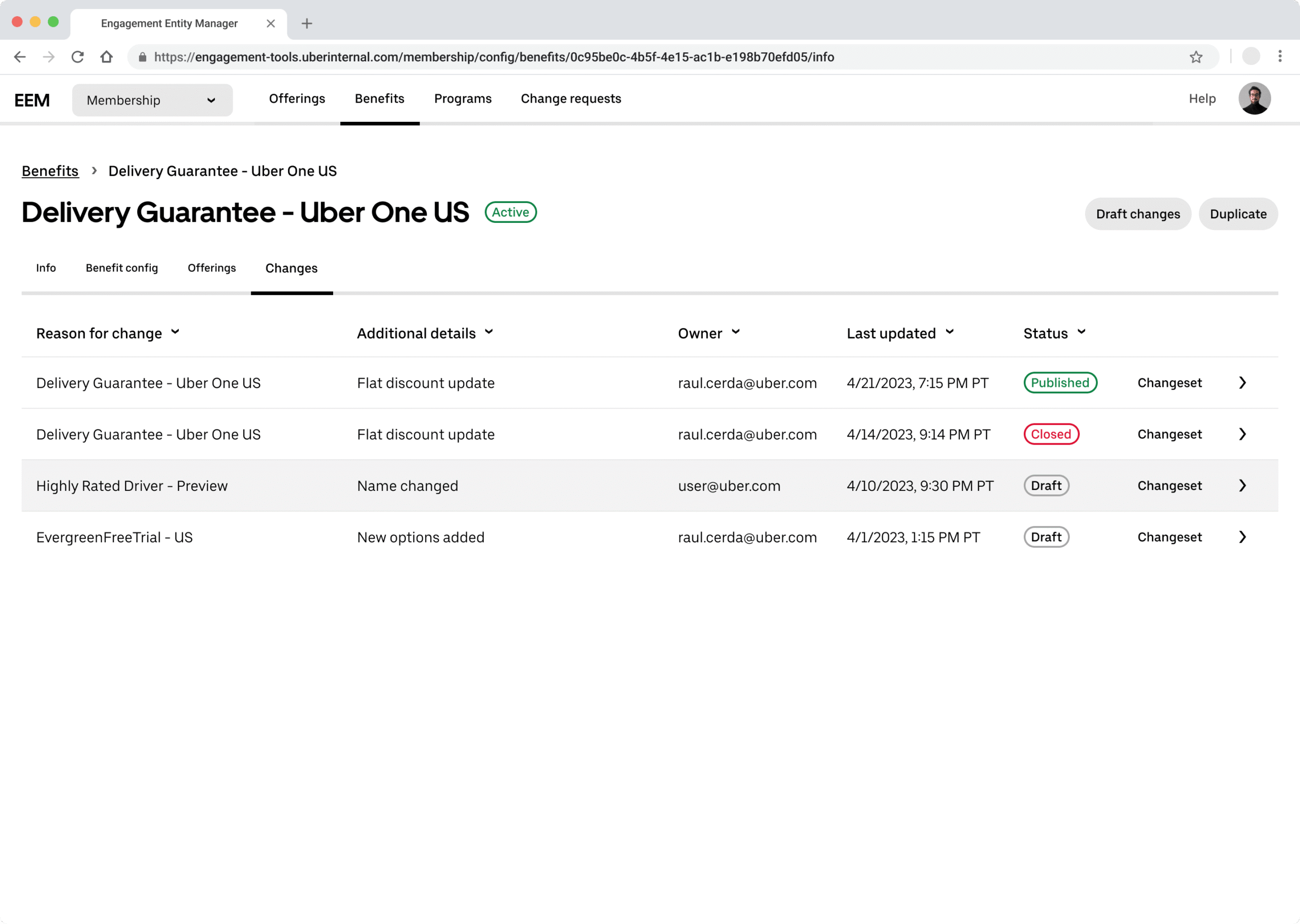
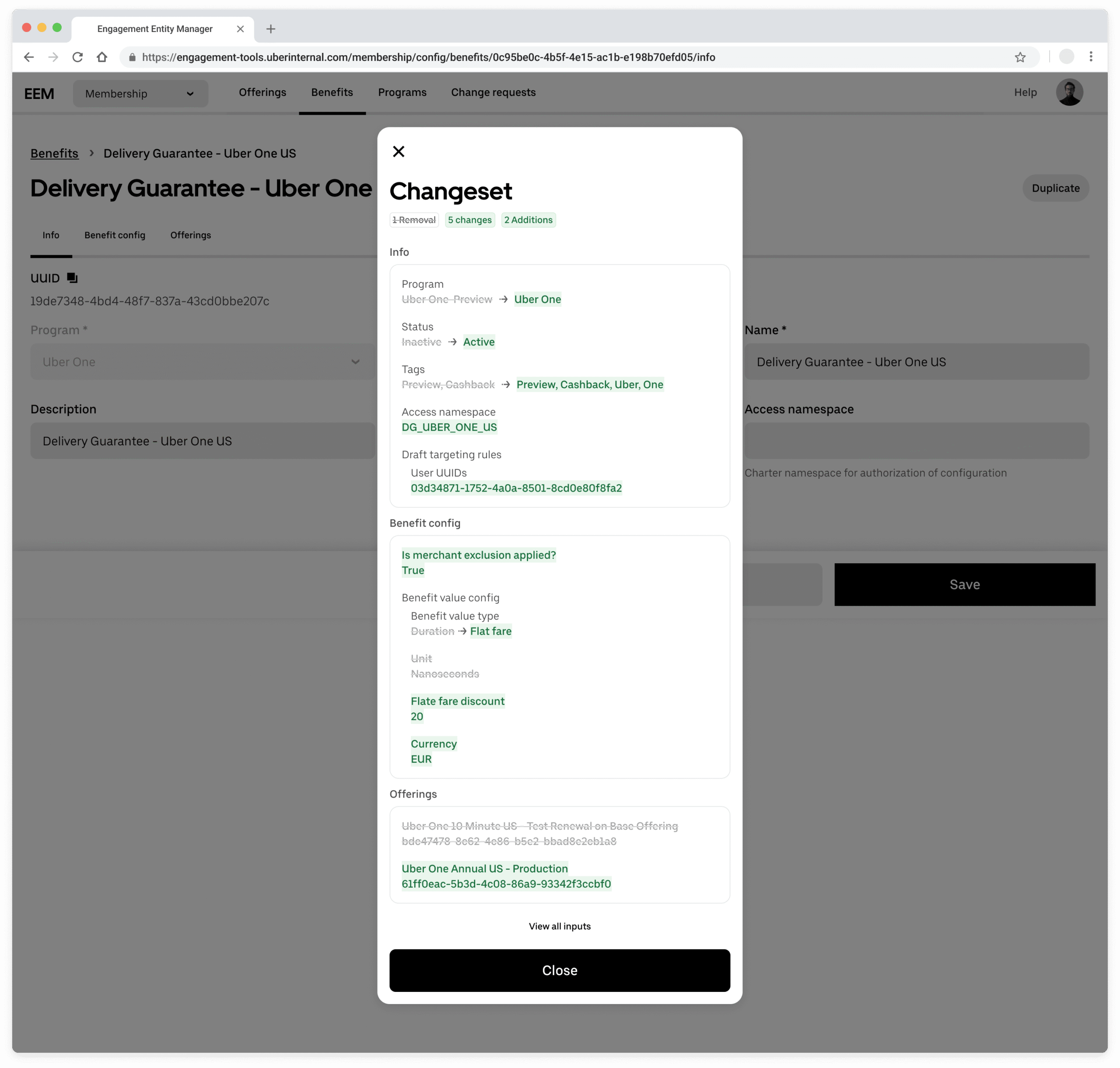
- The “Changeset” for Operations: The biggest risk to the business was a misconfiguration in a mass campaign. To mitigate it, I designed a change-review system similar to a diff checker. Before approving a change, supervisors could see a field-by-field comparison of the changes, similar to how developers review code changes. This reduced the risk of errors and sped up the validation process.
About the solution
The redesigned EEM platform gave membership teams a robust, easy-to-use self-service tool, built on three pillars:
- Operations agents gained full control over their campaigns’ lifecycle, from creation and targeting through activation and analysis, with roles and permissions to ensure security.
- The new dashboard and change history let any team member see who made which change, when, and why, eliminating confusion and improving collaboration.
- The platform let teams across the 34 countries (at the time) manage their own campaigns independently, letting Uber personalize offers locally while keeping centralized control.
Results and impact
EEM’s impact was felt immediately and kept generating value throughout 2023 and beyond.
- Time-to-market for launching or modifying a campaign dropped from a process that took weeks (involving tickets, reviews, and manual validations) to minutes.
- Dependency on the engineering team was eliminated entirely for day-to-day operations, freeing up development resources to focus on building new features or paying down technical debt.
- The agility gained with EEM was a key factor in managing Uber One’s growth from 12 to 19 million members throughout 2023.
- The ability to launch and optimize offers effectively was key to Uber One members contributing more than 30% of the company’s total gross profit by the end of 2023.
- By enabling faster, more relevant personalization of benefits and area-based, personalized targeting, the platform helped reinforce members’ already-high retention rate, which was already 15% higher than that of non-members.
Reflections
This project was one of the highest real-impact projects I’ve worked on, and it taught me that even at large companies, these kinds of problems and needs exist, and that with little time, you have to try to solve them in order to deliver on functionality already committed to the roadmap.
I’ve had a lot of experience building internal tools throughout my career, and I’ve seen some teammates look down on them, thinking they can’t have a real or visible impact on a company’s end user. But as you can see in this case, the solution had a direct effect on business results and on operational efficiency for everyone involved, not just the end customer.
Lastly, I learned to communicate and defend the value of design in a high-pressure environment, achieving a measurable impact that lasted long after my direct contribution ended.
Disclaimer
This project was developed under an NDA, so the screens shown are presented without context. My intent is to talk about what I can talk about without breaking the NDA, presenting the solution without going into specifics or detailing flows and processes.